Key takeaways
- The typical starting dosage of Lyrica (pregabalin) for adults is 150 mg per day. But your doctor will typically increase your dose over a few weeks until you reach an effective maintenance dose.
- The maximum dose of Lyrica is 300 to 600 mg per 24-hour period, depending on your specific condition. Your doctor will prescribe the lowest effective dose to manage your condition.
- Never adjust your Lyrica dosage without talking with your doctor first. Taking too much Lyrica may lead to an overdose. Suddenly decreasing your dose or stopping Lyrica may also cause severe side effects, like suicidal thoughts or behaviors.
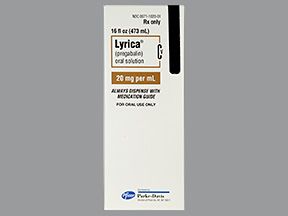
Lyrica comes as capsules and a liquid solution, either of which you take by swallowing. The active ingredient in Lyrica is pregabalin. An active ingredient is what makes a drug work. It belongs to a group of drugs called antiepileptic drugs.
Lyrica CR is another form of pregabalin. It isn’t used to treat all of the same conditions as Lyrica, and it works differently in your body. This article does not cover Lyrica CR dosages. For more information about Lyrica CR, including its dosages, talk with your doctor.
This article describes the dosages of Lyrica, as well as its strengths and how to take it. To learn more about Lyrica, see this in-depth article.
| Lyrica strengths | Lyrica starting dosage (adults) | |
|---|---|---|
| Lyrica capsule | • 25 milligrams (mg) • 50 mg • 75 mg • 100 mg • 150 mg • 200 mg • 225 mg • 300 mg | 150 mg daily, divided into two or three doses depending on the condition being treated |
| Lyrica oral solution | 20 mg per milliliter (mg/mL) | 150 mg daily, divided into two or three doses depending on the condition being treated |
Children’s dosages are based on body weight. For more information, see “What’s the dosage of Lyrica for children?” below.
Please keep in mind that this article covers Lyrica’s standard dosage schedule, which is provided by the drug’s manufacturer. But always follow the dosing instructions your doctor prescribes.
Below are some commonly prescribed Lyrica dosages, including the typical starting and maximum doses. But you should follow the dosage instructions your doctor gives you.
| Starting dose | Maximum dose | Frequency | |
|---|---|---|---|
| Diabetic peripheral neuropathy | 150 mg daily | 300 mg daily | 3 divided doses (8 hours apart) |
| Fibromyalgia | 150 mg daily | 450 mg daily | 2 divided doses per day (12 hours apart) |
| Partial onset seizures | 150 mg daily | 600 mg daily | 2 divided doses (12 hours apart), or 3 divided doses (8 hours apart) |
| Nerve pain from shingles | 150 mg daily | 600 mg daily | 2 divided doses (12 hours apart), or 3 divided doses (8 hours apart) |
| Nerve pain from spinal cord injury | 150 mg daily | 600 mg daily | 2 divided doses per day (12 hours apart) |
Is Lyrica used long term?
Yes, Lyrica is usually used as a long-term treatment. If you and your doctor determine that it’s safe and effective for your condition, you’ll likely take it long term.
Dosage adjustments
If you have kidney problems, your doctor may recommend a lower dosage of Lyrica than usual. Before you start taking Lyrica, let your doctor know about any kidney problems that you have.
Lyrica may be used with other seizure drugs to treat focal onset seizures in children ages 1 month and older. For this purpose, doctors calculate the dosage of Lyrica based on weight in kilograms (kg). One kg is about 2.2 pounds (lbs.).
Your doctor will use your child’s weight to calculate their dose.
| Starting dose | Maximum dose | Frequency | |
|---|---|---|---|
| Age: 1 month to 4 years old Weight: Less than 30 kg | 3.5 mg/kg daily | 14 mg of Lyrica per kg of body weight (mg/kg) daily | 3 divided doses (8 hours apart) |
| Age: 4 years and older Weight: Less than 30 kg | 3.5 mg/kg daily | 14 mg/kg daily | 2 divided doses (12 hours apart), or 3 divided doses (8 hours apart) |
| Age: 4 years and older Weight: 30 kg (66 lb) or more | 2.5 mg/kg daily | 10 mg/kg daily (not to exceed 600 mg) | 2 divided doses (12 hours apart), or 3 divided doses (8 hours apart) |
Lyrica is a
Misuse refers to using a drug in a way that’s not prescribed (for example, taking more than the recommended dosage). With dependence, a person’s body becomes used to a drug and needs it to function as usual.
In studies, some people taking Lyrica reported that the drug made them feel “high.” Such feelings may increase the risk of recreational use with this drug, which could lead to addiction in some cases.
Lyrica is a Schedule V controlled substance. Drugs in this group have a lower potential for misuse compared with other controlled substances. That said, if you have a history of substance or alcohol misuse, you may have an increased risk of Lyrica misuse. In this case, your doctor may recommend a different treatment for your condition.
Lyrica capsules and liquid solution are taken by mouth. Depending on your condition, you’ll usually divide your daily dose into two or three smaller doses to take over the course of a day. Lyrica can be taken with or without food.
If you have trouble swallowing capsules, see this article for tips on how to take this form of medication. Your doctor or pharmacist may also have suggestions for ways to make taking capsules easier.
You shouldn’t stop taking Lyrica without first talking with your doctor. Stopping Lyrica treatment suddenly can cause withdrawal symptoms. For more information, see the “Lyrica and withdrawal and dependence” section.
Lyrica can cause sleepiness and dizziness. Until you know how Lyrica affects you, avoid driving a car, operating machinery, or doing other potentially dangerous activities. Also, you should avoid drinking alcohol during Lyrica treatment, as doing so increases your risk of these side effects.
If you miss a dose of Lyrica, take it as soon as you remember. But if it’s almost time for your next dose, skip the missed dose and take the next dose at your regular time. You shouldn’t take two doses at the same time, as this can increase your risk of serious side effects.
If you need help remembering to take your dose of Lyrica on time, try using a medication reminder. This can include setting an alarm or downloading a reminder app on your phone.
Do not take more Lyrica than your doctor prescribes, as this can lead to serious side effects.
Symptoms of overdose
Symptoms caused by an overdose can include:
- agitation and restlessness
- anxiety and depression
- confusion
- seizures
- serious heart problems
What to do in case you take too much Lyrica
Call your doctor right away if you think you’ve taken too much Lyrica. You can also call 800-222-1222 to reach America’s Poison Centers or use its online resource. But if you have severe symptoms, call 911 (or your local emergency number) immediately or go to the nearest emergency room.
Lyrica has the potential for misuse and can cause withdrawal symptoms. In studies, withdrawal symptoms occurred in some people who suddenly stopped taking Lyrica. These symptoms can occur when your body has become dependent on a drug that you stop taking.
Some withdrawal symptoms include:
- nausea
- diarrhea
- anxiety
- excessive sweating
- headache
- trouble sleeping
Suddenly stopping Lyrica may also increase your risk of having suicidal thoughts or behaviors.
If you want to stop taking Lyrica, talk with your doctor. They’ll help you gradually lower your dose over a minimum of 1 week to prevent withdrawal symptoms.
Below are answers to some commonly asked questions about Lyrica’s dosage.
The Food and Drug Administration (FDA) has not approved Lyrica to treat sleep problems, anxiety, or sciatica. If your doctor prescribed Lyrica to you for any of these conditions, it’s considered an off-label use. Off-label use is when a drug is prescribed to treat a condition other than what’s approved by the FDA.
Studies have looked at pregabalin, the active ingredient in Lyrica, for treating these conditions. (An active ingredient is what makes a drug work.) Reviews of studies have found pregabalin may be effective for treating generalized anxiety disorder (GAD) but not for treating sciatica. An older review suggests the drug may be effective for treating sleep problems related to GAD.
The drug’s manufacturer doesn’t provide recommended dosages of Lyrica for these conditions. If your doctor prescribes Lyrica for treating sleep problems, anxiety, or sciatica, follow their dosage instructions.
If you have questions about Lyrica’s off-label uses, talk with your doctor.
Yes, taking a higher dose of Lyrica can increase your risk of side effects. In studies, people taking higher doses of Lyrica had certain side effects more often, such as dizziness and sleepiness.
Also, if you take too much Lyrica, you can develop symptoms of an overdose. For more information, see the “What should be done in case of an overdose?” section.
When you begin taking Lyrica, your doctor will start you on a lower dose of the drug. They may then increase your dosage. This depends on how your body responds to the medication and whether you have any bothersome side effects.
If you have concerns about side effects with a higher dosage of Lyrica, talk with your doctor.
The sections above describe the usual dosages of Lyrica provided by the drug’s manufacturer. If your doctor recommends this drug for you, they’ll prescribe the dosage that’s right for you.
Remember, you shouldn’t change your dosage of Lyrica without your doctor’s recommendation. Only take Lyrica exactly as prescribed. Talk with your doctor if you have questions or concerns about your current dosage.
Here are some examples of questions you may want to ask your doctor:
- If Lyrica isn’t working well enough for me, should my dosage change?
- If I have liver problems, will you need to adjust my dosage of Lyrica?
- Would a different dosage increase or reduce my risk of side effects from Lyrica?
If you have type 2 diabetes and are looking to join an online community of others living with this condition, check out Bezzy T2D.
Disclaimer: Healthline has made every effort to make certain that all information is factually correct, comprehensive, and up to date. However, this article should not be used as a substitute for the knowledge and expertise of a licensed healthcare professional. You should always consult your doctor or another healthcare professional before taking any medication. The drug information contained herein is subject to change and is not intended to cover all possible uses, directions, precautions, warnings, drug interactions, allergic reactions, or adverse effects. The absence of warnings or other information for a given drug does not indicate that the drug or drug combination is safe, effective, or appropriate for all patients or all specific uses.