














Key takeaways
- People with multiple myeloma face a significantly higher infection risk because abnormal plasma cells produce ineffective antibodies and cancer treatments further weaken the immune system.
- Protective measures like wearing masks in crowded settings, avoiding sick individuals, and staying home during peak illness seasons help minimize contact with infectious agents when your immunity is compromised.
- Maintaining rigorous hygiene practices—including frequent handwashing, keeping your living spaces clean, and handling food safely—can substantially lower your exposure to harmful germs.
Multiple myeloma is a type of blood cancer that starts in white blood cells called plasma cells. Plasma cells are found in your bone marrow, and one of their main jobs is to make antibodies to help you fight germs like bacteria and viruses.
In multiple myeloma, abnormal plasma cells grow uncontrollably. They crowd out healthy plasma cells and produce antibodies that don’t function correctly. As abnormal antibody proteins enter the bloodstream, they travel to other organ systems where they can cause damage and inflammation.
When you live with multiple myeloma, your risk of infection increases. The antibodies your plasma cells produce aren’t as effective, and cancer treatments like chemotherapy and steroids can also suppress immunity.
Infection prevention is important—one 2024 population-based study found people living with multiple myeloma had a 5-fold risk of infection compared to the broader population.
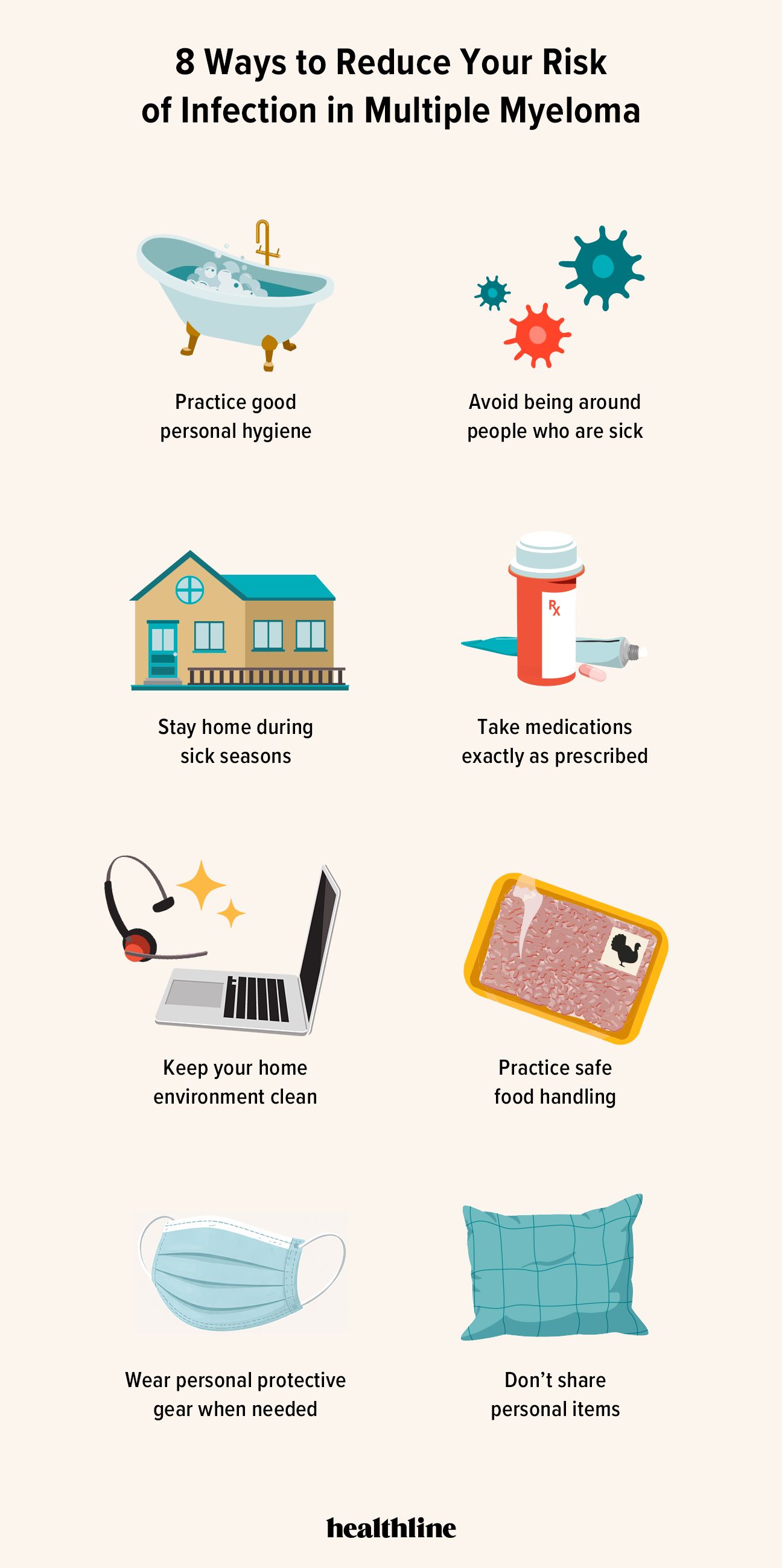
Good personal hygiene is one of the easiest ways to reduce your risk of infection, and frequent hand-washing is at the top of the list. Washing your hands for at least
Wash your hands any time you:
- eat or prepare food
- use the bathroom
- touch an animal
- clean
- touch a public surface (like a gas pump or a door handle)
- take medication
In addition to handwashing, other personal hygiene practices that help reduce your risk of infection
- showering or bathing daily
- washing your hair regularly
- keeping your feet clean, dry, and your nails trimmed
- using a brush to clean your fingernails regularly
- cleansing your face after you’ve touched it with your hands or an object
- brushing your teeth at least
twice a day - avoiding touching your eyes
Many illnesses are spread through close contact with someone who is already sick. When you live with multiple myeloma, avoiding people who aren’t feeling well helps reduce your risk of infection. It’s OK to ask loved ones to let you know how they’re feeling before you see each other. Even a minor sickness for them could have serious consequences for you. Note that some groups of people may be sick without many visible symptoms — like children — so you’ll want to take additional precautions.
Certain times of the year are known for illness spikes. Flu season, for example, typically peaks between
Keep watch on the news and social media. When a sickness is going around, people tend to talk about it. Your county health department will also often track illnesses.
When your immune system is weakened, taking medications exactly as prescribed can help stop infections before they start. Some people diagnosed with multiple myeloma are prescribed preventative medications specifically to help fight infections.
Missing doses or taking them at inconsistent times can affect the concentration of those drugs in your system. If levels aren’t stable, germs may survive and become resistant to treatment.
Getting any recommended vaccines is also critical for people living with cancer, especially flu, RSV, COVID and pneumonia.
You spend a lot of time at home, so it is important to keep it clean to cut down on germs. Areas to focus on include:
- counters, switches, handles, and other high-touch surfaces
- shared linens, clothes, towels, and bedding
- electronics and keyboards
- toilets and bathrooms
Cleaning involves basic practices such as laundry, vacuuming, dusting, and mopping, but it can also mean disinfecting regularly when your immune system is weakened. Disinfecting requires using an EPA-registered disinfectant product or a diluted bleach solution of
For an additional boost to your home’s cleanliness, consider adding an air purifier to help cut back on airborne irritants.
Food is another major source of infection and one that often gets overlooked. According to the World Health Organization (WHO), an estimated
Not only can food be a source of bacteria and viruses, but it can also carry parasites, infectious agents called prions, and chemicals.
Ways to practice food safety
- following storage and handling standards (like keeping certain foods refrigerated)
- washing your hands before and after eating or preparing food
- disinfecting food prep areas
- cleaning the tops of cans before opening
- washing fruits and vegetables under running water
- being mindful of “use by” and expiration dates
- not eating free food samples
- cooking all meats to the required internal temperature
Protecting yourself from infection when you have multiple myeloma may mean wearing protective gear, such as a mask. Masks can add a layer of protection if you need to spend time in crowds, leave your home during sick season, or be around people who might be sick.
You can also wear disposable gloves if you go out or carry tissues for when you need to touch handles or counters in public. When you get home, leaving your shoes outside, showering, and changing into fresh clothes can reduce your exposure to germs you brought back.
Since many germs spread from contact with other people, not sharing personal items can help prevent infections. Don’t share:
- drinks
- lip balm
- makeup
- eating utensils
- hair styling tools and accessories
- hats, gloves, and scarves
- toothbrushes
- nail clippers or files
- headphones and earbuds
- pillows, blankets, stuffed animals
- eye drops, nose sprays, inhalers
- razors
Multiple myeloma can affect how well your body fights off germs. As abnormal plasma cells crowd out healthy ones, your ability to make functional antibodies decreases.
To help lower your risk of infection in multiple myeloma, proper personal hygiene, home cleanliness, and public precautions are important. If you’re not sure where to start, regular handwashing and wearing a mask when around others are easy changes to make.