














The Fast Facts
- Peptides are short chains of amino acids that signal to the skin to produce key proteins, like collagen and elastin. They are often added to creams, cleansers, and serums.
- Depending on the type, they may help firm skin, reduce wrinkles, repair damage, or boost hydration.
- We love The Ordinary Multi-Peptide + Copper Peptides 1% Serum, which is designed to repair skin, promote firmness, and target visible signs of aging.
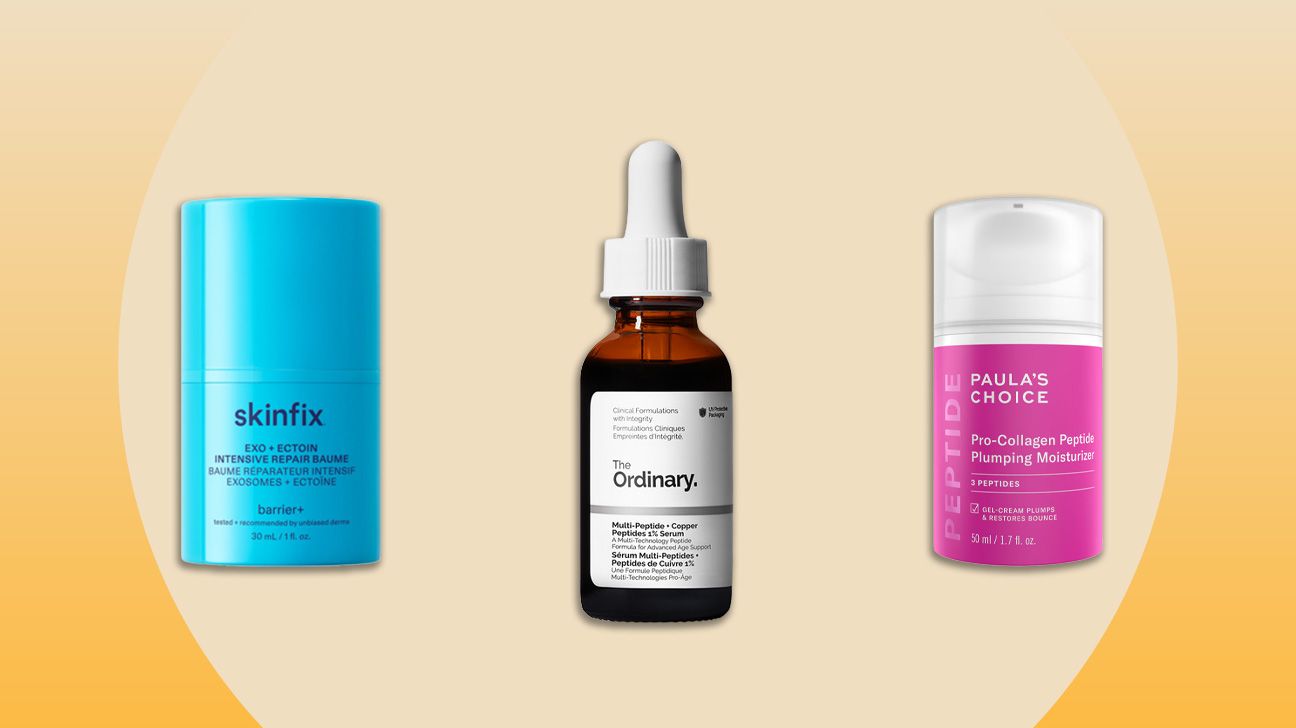
Peptides are short-chain amino acids that act like tiny messengers for your skin. They occur naturally in the body and signal to your skin to produce collagen, repair damage, and maintain firmness and elasticity.
Some peptides can be naturally derived from sources such as plants, milk, or silk, while others are synthetically produced in labs. Most skin care products contain the latter.
Different peptides target different concerns; they may support collagen production, deliver essential minerals, protect structural proteins from breakdown, or relax facial muscles to reduce expression lines. In essence, they help your skin stay healthy and youthful-looking.
Discover our pick of the best peptides skin care below.
We chose these peptide skin care products by consulting dermatologists, who helped us select a range of products to address different skin concerns, all with effective, safe ingredients.
We consider customer reviews and professional recommendations to narrow our picks to the most reliable and widely loved products currently available.
Each product is vetted by our team for medical and business standards.
»Learn more: Our approach to content integrity
What to look for in peptide skin care products
- Peptide type: Different peptides target different concerns, so choose ones that match your goals. A blend of multiple peptides often works better than a single type.
- Complementary ingredients: Look for hydrating components, like hyaluronic acid or niacinamide.
- Effective formulas: Choose serums or lightweight creams designed to keep peptides stable and active on your skin.
- Easy absorption: Consider products that feel light and absorb quickly so peptides can actually reach your skin.
| Product | Form | Peptide type(s) | Key ingredients | Benefits | Price |
|---|---|---|---|---|---|
| The Ordinary Multi-Peptide + Copper Peptides 1% | serum | carrier, signal, & neurotransmitter-inhibiting peptides | • hyaluronic acid • glycerin | • reduces fine lines • boosts elasticity • targets signs of aging • antioxidant protection | $32.00 |
| CeraVe Skin Renewing Night Cream | cream | signal peptide | • ceramides • niacinamide • hyaluronic acid | • softens and hydrates • restores the skin barrier • calming | $17.99 |
| Skinfix Barrier+ Intensive Repair Baume | balm | signal peptides | • ceramides • squalane • glycerin | • calming • improves firmness, elasticity, and fine lines • retinol-free | $69.00 |
| Paula’s Choice Pro-Collagen Peptide Plumping Moisturizer | gel cream | signal peptides | • hyaluronic acid • squalane • glycerin • vitamin B12 | • hydrates • improve skin’s bounce • supports collagen and elastin levels | $49.00 |
| e.l.f. SKIN Holy Hydration! Face Cream with SPF 30 | cream | signal peptides | • hyaluronic acid • niacinamide • glycerin | • soft, smooth, supple skin • sun protection • hydrates | $13.69 |
| Rhode Rhode Peptide Lip Treatment | lip balm | signal peptide | • shea butter • vitamin E | • nourishes, hydrates, and replenishes dry lips • smooths fine lines on the lips | $20.00 |
There are four main types of topical peptides that target different skin concerns.
| Type | What it does & skin care benefits | Examples |
|---|---|---|
| Signal peptides | Signal peptides signal skin cells to perform specific functions, most notably stimulating collagen, elastin, and other proteins. By doing this, they help the skin increase firmness and elasticity, reduce the appearance of fine lines and wrinkles, support skin repair, and improve overall skin texture. | You may see the following ingredients on labels: • Palmitoyl Pentapeptide-4 • Tripeptide-10 Citrulline • Palmitoyl Hexapeptide-12 |
| Carrier peptides | Carrier peptides transport helpful minerals, such as copper and manganese, into the skin. Copper plays an important role in skin health. It helps the skin repair itself, produce collagen, and protect against free-radical damage. This, in turn, helps support healthier, stronger skin. | You may see the following ingredients on labels: • Copper Tripeptide‑1 (GHK-Cu) • Manganese Tripeptide‑1 |
| Enzyme inhibitor peptides | Some enzymes in the skin can degrade collagen and other support proteins, particularly after sun exposure or oxidative stress. These peptides help block or slow those enzymes, which helps the skin maintain firmness and elasticity. | Examples include peptides derived from: • soybeans • silk • rice |
| Neurotransmitter-inhibitting peptide | These peptides help relax facial muscles that cause expression wrinkles. They work by reducing signals that tell muscles to contract, thereby softening lines caused by repeated facial movements like frowning or squinting. Because of this, they are sometimes described as having a “Botox-like” effect, although they work much more gently on the skin’s surface. | You may see the following ingredients on labels: • Acetyl Hexapeptide-3 (Argireline) • Pentapeptide-18 (Leuphasyl) • Tripeptide-3 (Syn-Ake) |
Peptides help signal the skin to produce more collagen and other proteins that support its health. In skin care, they may help improve firmness, strengthen the skin barrier, reduce inflammation, and soften the appearance of fine lines.
There isn’t a single best peptide for the skin, as different peptides serve different purposes in skin care. However, some peptides commonly used in skin care include:
- Copper peptides
- Matrixyl (Palmitoyl Pentapeptide-4)
- Argireline (Acetyl Hexapeptide-8)
- Palmitoyl Tripeptide-1
- Palmitoyl Tetrapeptide-7
These peptides help boost collagen production, improve skin firmness, reduce wrinkles, lessen inflammation, and support skin repair. Some skin care products combine several peptides to target multiple concerns at once.
Yes, peptides are generally safe for skin and are well tolerated by most skin types. They are commonly used in serums and moisturizers and are considered gentle ingredients. However, as with any skin care ingredient, some people may experience irritation, so patch testing a new product is recommended.
Yes, you can use copper peptides with retinol, but it’s usually best to apply them at different times in your routine to reduce the risk of irritation and help each ingredient work effectively.
Collagen peptides are small chains of amino acids derived from collagen, the protein found in skin, bones, and connective tissue. Because they are broken down into smaller pieces, they’re easier for the body to absorb. They’re commonly taken as supplements or used in topical products to support skin and joint health.
Peptides can support several aspects of skin health, particularly when used consistently as part of a skin care routine.
Potential benefits include:
- upholding the skin’s natural repair processes
- supporting collagen production
- reducing the appearance of fine lines and wrinkles
- strengthening the skin barrier
- improving skin texture and elasticity
Peptides generally work well with most skin care ingredients. However, certain products may lose effectiveness if used together.
For example, highly acidic ingredients, such as strong exfoliating acids (AHAs and BHAs) or low‑pH vitamin C formulas, may make peptides work less effectively when layered directly together.
This doesn’t mean you can’t use these ingredients altogether. Many people simply apply them at different times of day, for example, using vitamin C in the morning and peptides at night.
Peptides are small chains of amino acids that act as messengers for your skin, signaling it to produce vital proteins like collagen and elastin.
Different types of peptides offer a range of benefits, from reducing fine lines to protecting against environmental damage.
For optimal results, look for products that combine multiple peptides with complementary ingredients like hyaluronic acid or niacinamide, and choose formulas that are easy to absorb.