













Farmed salmon vs. wild-caught salmon
Farmed salmon and wild-caught salmon both offer substantial health benefits, but there are some key differences between the two.
Farmed salmon tends to have higher fat content, particularly omega-3 fatty acids, due to their controlled diet.
Wild-caught salmon is generally considered leaner, with a more natural, diverse diet from the ocean that provides a different nutrient profile. Wild-caught salmon is also praised for its lower fat content and fewer environmental concerns, such as the impact of salmon farming practices.
Comparing salmon nutritional profiles
| Wild-caught salmon (113 grams) | Farmed salmon (113 grams) |
|---|---|
| 22 grams protein | 23 grams protein |
| 5 grams fat (8% DV) | 15 grams fat (19% DV) |
| 39 mg calcium (4% DV) | 10 mg calcium (1% DV) |
| 1 mg iron (6%) | 0.4 mg iron (2% DV) |
| 99 mg cholesterol (33% DV) | 60 mg cholesterol (20% DV) |
Spicy Salmon Bowls
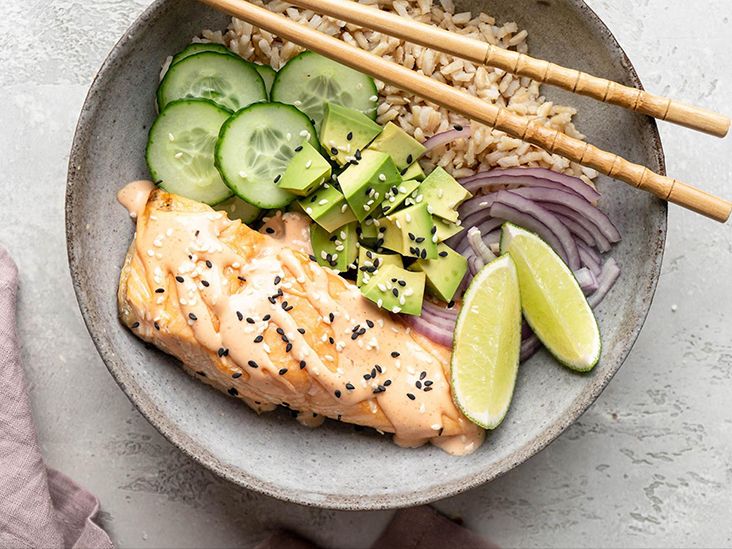
Ingredients:
Makes 4 servings
Instructions:
Nutrition Facts
Servings Per Recipe: 4| Calories | 542 |
| Total fats | 24.1 g |
| Saturated fat | 3.7 g |
| Trans fat | 0 g |
| Total carbohydrates | 54.9 g |
| Dietary fiber | 5.9 g |
| Added sugars | 8.5 g |
| Sodium | 862.7 mg |
| Protein | 28.5 g |